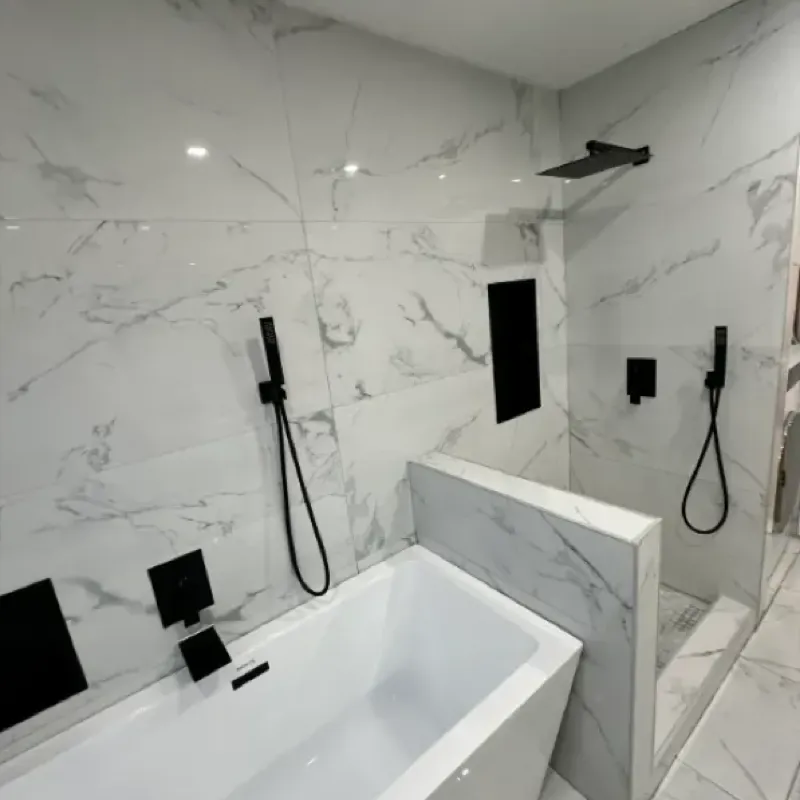
A short trip from the shop
Most Compton jobs begin with a visit, and the shop's location makes that easy to arrange. Call (626) 548-2429, say which room and which street, and the visit can be set up around your access. The shop is approximately 2 miles from the center of Compton, straight-line.
Proximity helps after the visit too. A missed measurement, a doorway that turned out an inch different, or a sample that needs another look is a short drive, not an afternoon.
What happens at the estimate visit
The visit is about the surface under the tile more than the tile. Walls and floors get measured, along with doorway heights, cabinet edges and drain locations. A straightedge runs across the floor to find humps and dips. Old tile gets tapped for hollow spots. Cracks, damp edges and loose concrete get marked and photographed so the written scope can refer to them.
Pricing waits until the base has been looked at. A number built from a photo covers only what the photo shows, and the expensive surprises tend to hide in what it leaves out. Bring a sample or the product name if you have chosen tile, since its size and thickness affect transitions and layout.
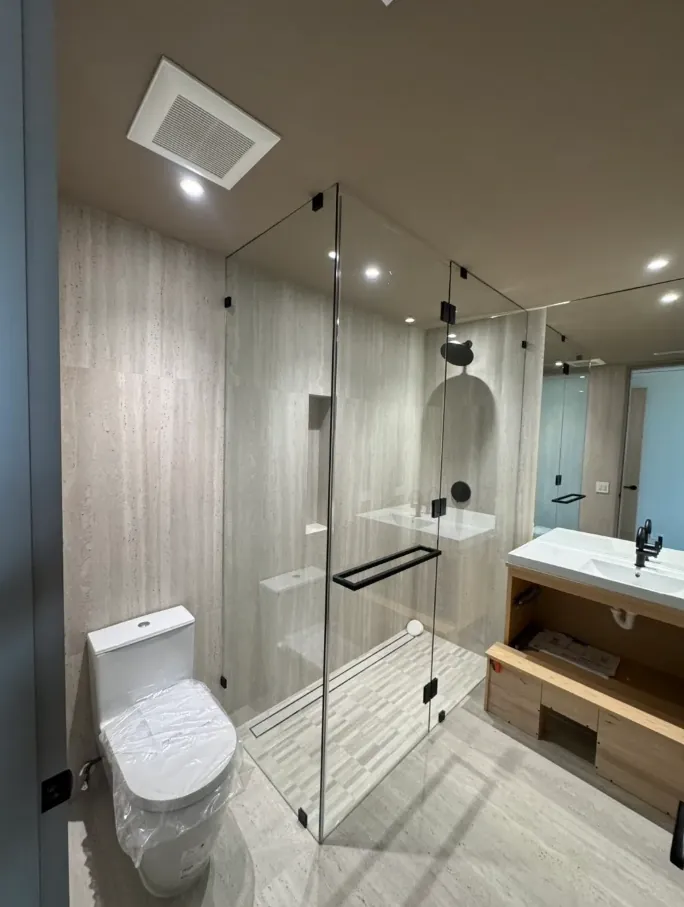

Single-family homes: slab or raised floor
A single-family house may sit on a concrete slab or on a wood floor over a crawlspace, and the two need different preparation. On a slab, the main questions are cracks, height changes, old adhesive and moisture from below. On a raised floor, the questions shift to how much the framing flexes and what the subfloor is made of.
Slab-on-grade floors take tile well when they are sound and dry. Damp edges, dark patches, white mineral deposits or a musty closed room point to water that tile will not stop. Where a moisture test is called for, the tile, mortar or membrane manufacturer sets the limit. If the source is unresolved, the sensible scope is to pause and fix it first.
Where an addition meets the old house
Additions create a seam. The old floor and the new floor may differ in height, in material and in how they move, and the line between them is where tile cracks first if nobody planned for it. A cold joint in the slab, a step down into the addition, or a framed floor butting a slab each calls for its own detail.
Measuring both sides at the visit settles the finished heights before tile is ordered. The seam may end up with a transition strip, a flexible joint or a feathered patch, depending on the height difference and the traffic across it.
Garage and patio conversions
A garage slab was poured as a place for cars. Many slope toward the door so water runs out, which means a room built there inherits a slope, and flat tile on a sloped base will show it. Oil stains, sealers and paint also have to come off or be dealt with before mortar can bond.
Patios have their own conditions: sun, rain, slope for drainage and slab edges that meet lawn or planters. Outdoor tile needs movement joints and a slip-resistant surface, and the choice of tile should reflect that. Permits and framing questions for a conversion belong to the owner and the city. The tile scope starts once those are settled. For the wet-room side of a conversion, see bathroom and shower tile.
Compton neighborhoods and housing mix
Compton's Housing Element covers housing needs, supply, quality, assistance and special-needs housing. Public city material names Sunny Cove, Leland, Downtown Compton and Richland Farms as neighborhoods, and the city has commercial and industrial areas alongside its residential ones.
That variety is why the estimate visit comes before the number. A scope for one street may not fit the next, and a house, an addition and a repaired room can sit under the same roof.
ZIP codes and the next step
Street-address projects in 90220, 90221 and 90222 are listed for Compton. A ZIP code does not describe the room, the access or the condition of the slab, so give the property address when you call. Send the room, its approximate size, the tile if known, and anything you have noticed about cracks, moisture, old tile or a shower. Photos help, and the visit does the rest.