Phasing around opening hours
Few commercial spaces can shut down completely, so the first question is which part of the floor can be released and when. A salon, an office suite or a small retail room can often be tiled in zones, with a temporary path kept open to the restroom or the back door. Each zone runs its own sequence of demolition, base repair, setting, grout and cure. Mortar and grout cannot be hurried to meet a reopening date, and every product data sheet states how long before foot traffic, rolling loads and water cleaning are allowed. Those intervals shape the phase plan, not the other way around.
Access, deliveries, and staging
Tile is heavy. A pallet of porcelain, bags of mortar and leveling compound, and pails of grout add up to more than most tenants expect to move. Ask the landlord or building manager about freight elevator reservations, loading dock hours, hand-truck routes and any paperwork the building requires from contractors before the first delivery. Storefronts and strip centers often have no dock, so material may come through the front door during early hours.
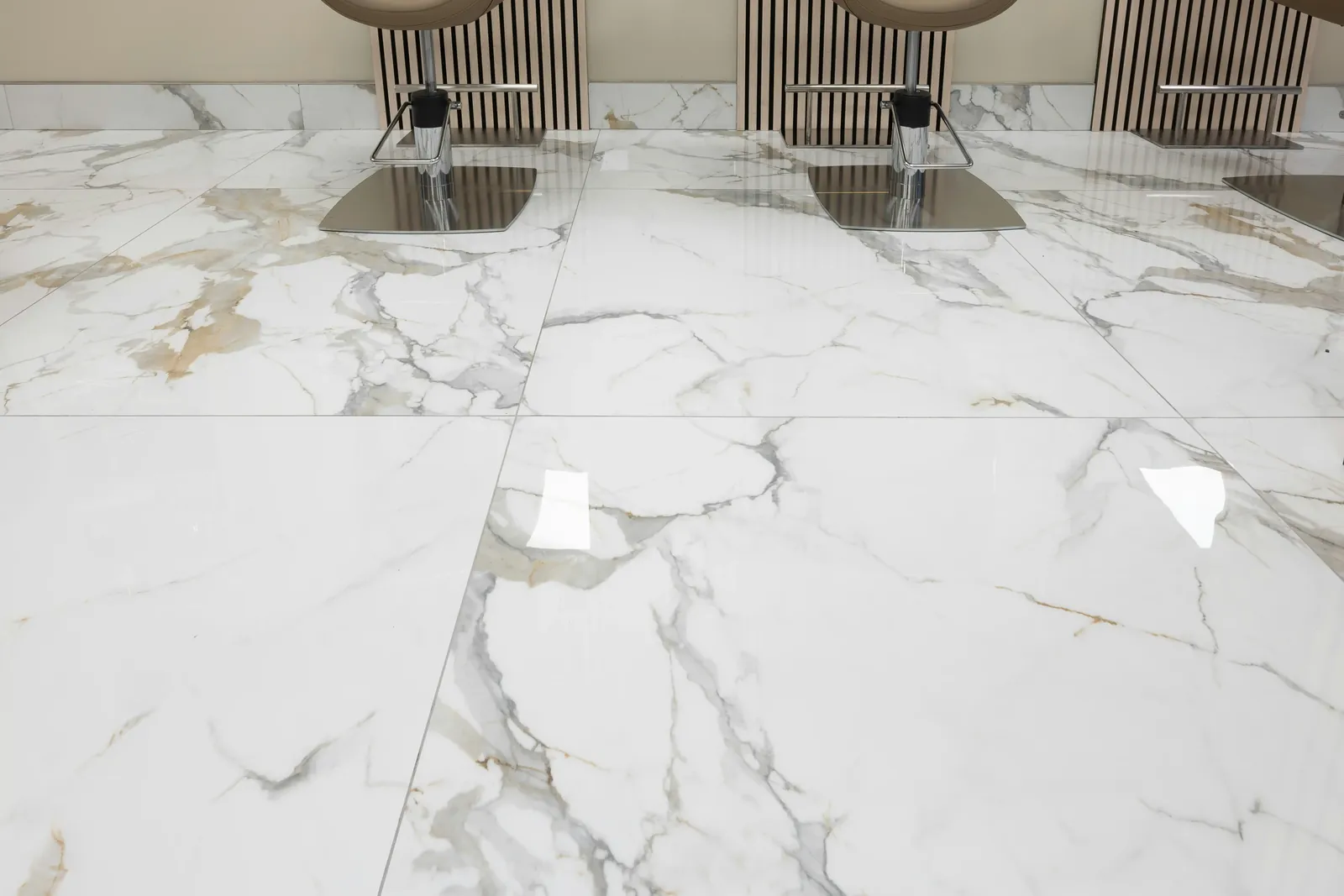
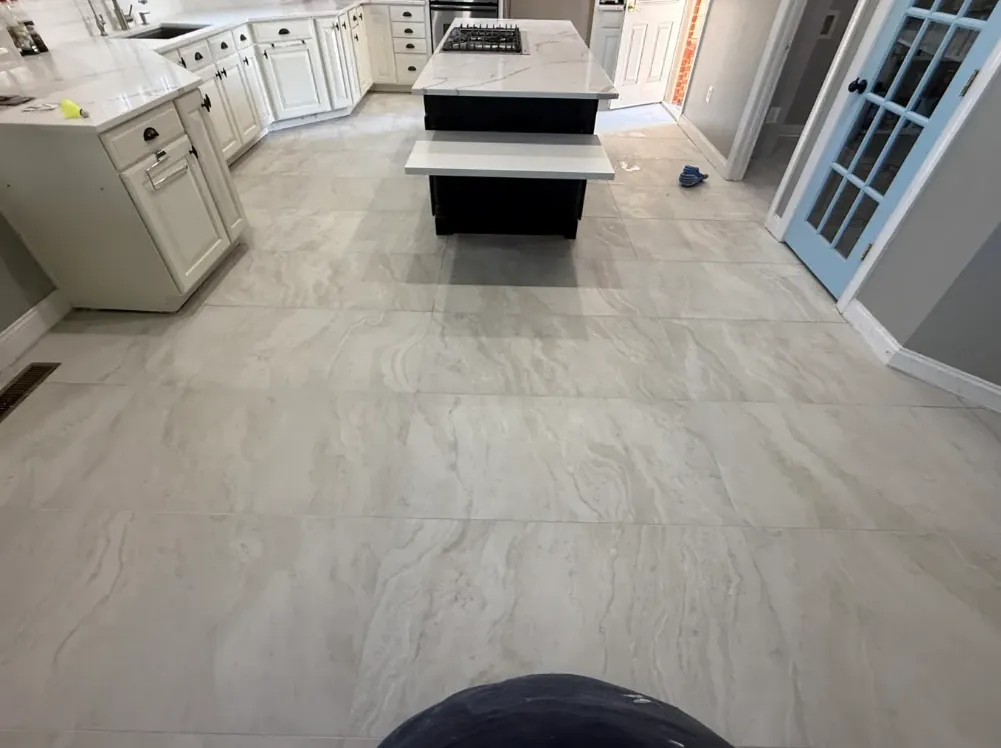
Floors under carts, chairs, and foot traffic
A showroom floor sees heels and strollers, a clinic sees gurneys and equipment carts, and a kitchen sees loaded racks. Rolling and point loads punish weak bond far faster than a living room does, and a hollow spot under a tile shows up as a cracked corner after the first heavy wheel. That is why coverage checks matter in these rooms. During setting, an installer lifts tiles to inspect mortar transfer, and where the specification asks for more coverage, the notch, the mortar and the back-buttering are chosen to deliver it.
The tile itself has limits. Thickness, the maker's commercial rating and any stated limit for rolling or impact loads are printed on the data sheet, so check them before ordering. The base matters just as much. Laitance, old adhesive and paint come off a slab before mortar goes on, and a wood-framed floor needs its deflection checked first. Both topics are covered under tile removal and floor prep.
Slip resistance: what to ask the tile maker
A polished tile that looks right in a lobby can be the wrong tile at a rainy entry, so slip resistance belongs in the conversation before anything is ordered. Ask the maker for the published dynamic coefficient of friction (DCOF) result, which test method produced it, and whether it was measured wet or dry. Then compare it with the project specification, the building owner's requirements and whatever the local authority expects for that location.
Texture helps, but texture also holds dirt, and that changes how the floor gets cleaned. A sample laid out and walked on by the people who will mop it is worth the extra day. Published numbers describe the tile as tested. A sealer, a floor finish or a cleaner chosen later can shift the result, so those choices get made together.
Movement joints in large floors
A wide, uninterrupted field of tile behaves differently from a bathroom. Temperature swings, slab shrinkage and building movement accumulate across distance, and rigid tile cannot absorb them. Joints belong at the perimeter, around columns, where the floor meets a different material, over existing slab control joints and at intervals across the field. Spacing comes from the project specification or the industry handbook for the tile and exposure, and glass walls that bring in sun get extra scrutiny.
Each joint stays open through the tile and the setting bed, then receives a flexible sealant or a metal or plastic profile. Plan the pattern so those lines land somewhere sensible, such as under a door leaf or along a display wall. A joint cut through the middle of a finished layout is a repair, while the same joint planned at the start is a detail.
Restroom and entry floors
Public restrooms and entries take the most water and forgive the least. A restroom floor needs fall to the drain, a waterproofing layer under the setting bed where the specification calls for one, and a cove or base detail at the wall so mop water never reaches the framing. Wash-down rooms and showers follow the assembly described under bathroom and shower tile.
Entries need a mat well or a transition that stops grit before it reaches the tile, plus a threshold that agrees with the door sweep, the accessible route and the floor on the other side. Heights at doors and elevators get decided before the first tile is set.
Grout and cleaning chemicals
The cleaning crew spends more time with the floor than the installer ever will. Cement grout stains and can wear under harsh acids. Epoxy grout resists many chemicals but sets fast and has a narrow cleanup window during installation. Urethane and other premixed grouts carry their own limits. Pick the grout against the cleaners and grease the room will actually see, then hand the facility the data sheet along with the matching cleaning method.
Curing before the doors open
Reopening depends on the slowest product in the stack. Leveling compound, mortar, grout, sealer and the sealant at movement joints each carry their own interval. Their data sheets list when light foot traffic is allowed, when heavy loads and rolling equipment can cross, and when water cleaning is safe. Set the earliest reopening date after reading them, and keep carts off the floor until that date arrives. Finished zones get protective board or paper if other trades still need to walk through.
Working beside other trades
Tile is rarely the only crew on site. Plumbers set drains and carriers, electricians and low-voltage installers run lines through slab and walls, painters hang plastic, and the fixture installer needs a finished floor to scribe against. Floor tile usually goes in before base cabinets and toilets, wall tile before final fixtures, and painting after grout cleanup.
Where the work happens
The shop is in Compton, and commercial work is quoted for Los Angeles, Compton, Long Beach, Downey and Carson. Storefronts, offices, apartment common areas and houses converted for business use can all land on the same schedule, and the slab or framing under each one is judged on site rather than assumed.
What the scope covers
| Preparation | Walk the space, record slab condition and flatness, and list repairs zone by zone. |
|---|---|
| Membrane | Waterproofing or crack isolation where the specification or the room calls for it. |
| Setting | Dry layout, mortar and notch matched to the tile, and lifted-tile coverage checks. |
| Grout | Grout chosen against the cleaning chemicals and traffic the room will see. |
| Sealing | Sealer only where the grout or tile data sheet requires one. |
Layout questions before the visit: try a layout on the Pattern Bench.


